

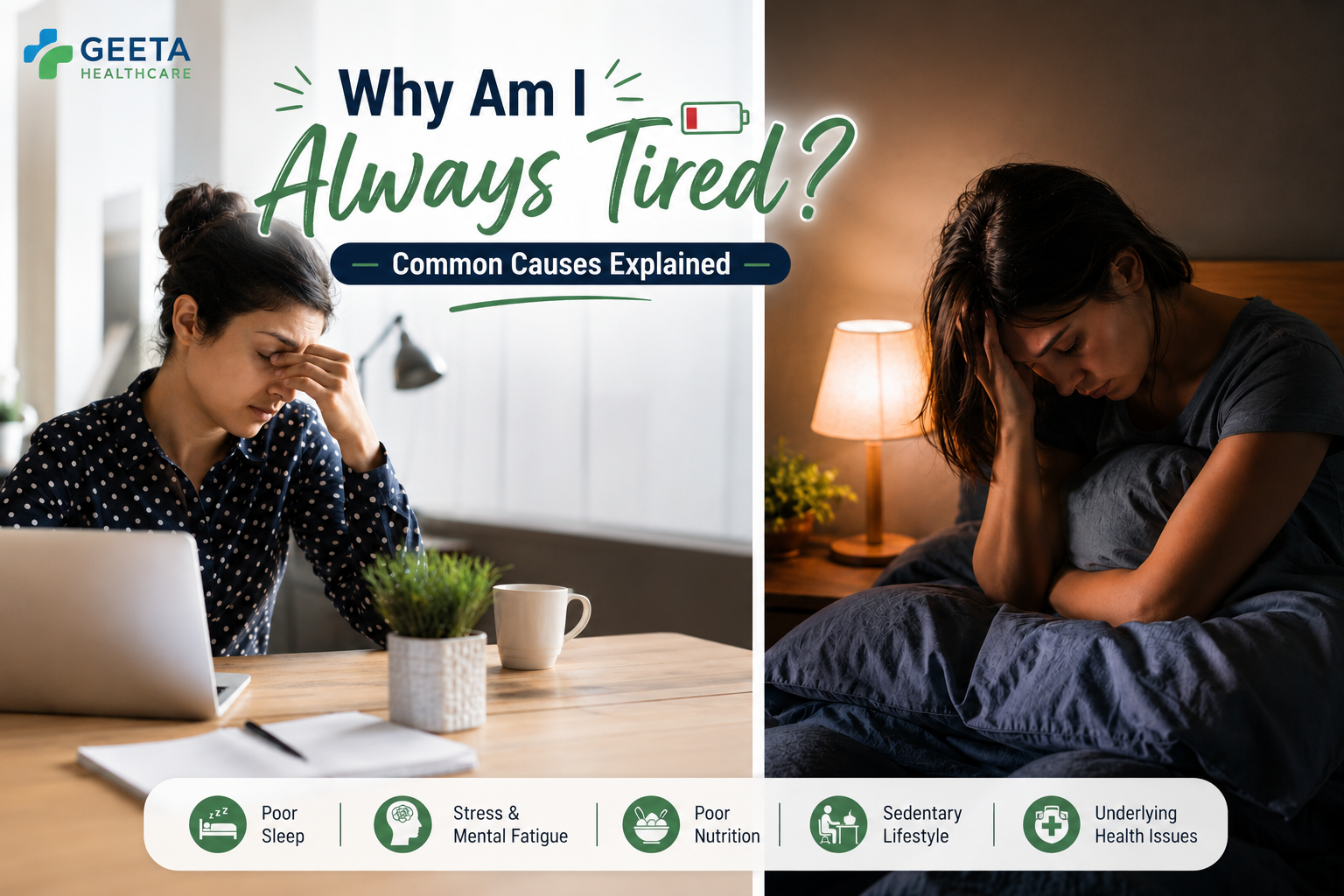
Feeling tired sometimes is totally normal, especially after a hectic day or a night of lousy sleep. But if you’re always exhausted, even with enough rest, it might point to something deeper affecting your health. Constant fatigue can mess with your productivity, mood, and overall life quality.
Figuring out what’s causing your tiredness is the first step to reclaiming your energy and boosting your well-being.
What Is Fatigue?
Fatigue is more than just being sleepy. It’s a steady lack of energy that can mess with your physical, mental, and emotional well-being. Unlike regular tiredness, Fatigue often doesn’t improve with rest and can disrupt your daily life.
If fatigue lingers for weeks or months, talking to a qualified general physician can help uncover the root cause and ensure you get the right treatment.

Common Causes of Constant Tiredness
1. Poor Sleep Quality
Getting seven to eight hours of sleep doesn’t guarantee you’ll feel rested. Interrupted sleep, an uncomfortable environment, too much screen time, or sleep disorders can leave you feeling wiped out all day.
Signs to look for:
● Trouble falling asleep
● Waking up frequently at night
● Waking up feeling tired
● Daytime drowsiness
2. Nutritional Deficiencies
Your body needs key nutrients to create energy. A deficiency in iron, vitamin B12, vitamin D, and other essential nutrients can lead to ongoing fatigue. If symptoms persist, consulting a healthcare professional at one of the reputable medical hospitals can help identify nutritional deficiencies and provide appropriate treatment.
Common symptoms are:
● Weakness
● Dizziness
● Pale skin
● Trouble concentrating
3. Stress and Mental Health Issues
Chronic stress, anxiety, and depression can seriously zap your energy. When your mind’s constantly under stress, your body stays on high alert, making it hard to feel rested.
Possible signs include:
● Irritability
● Lack of motivation
● Trouble focusing
● Changes in appetite
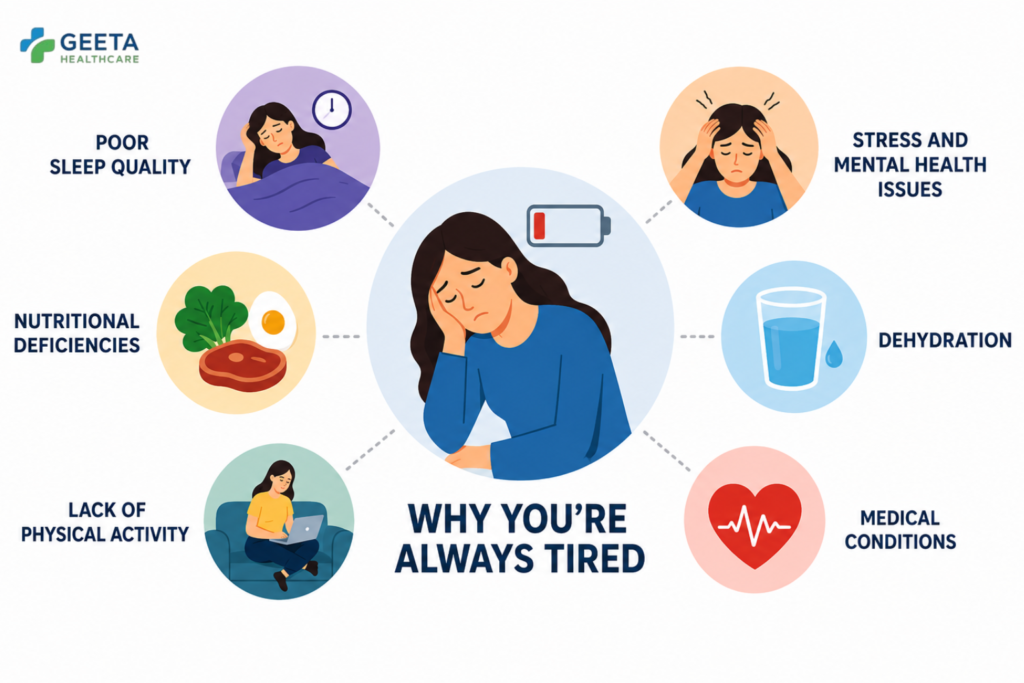
4. Dehydration
Even a little dehydration can make you feel sluggish and tired. Water is key for moving nutrients around and keeping your body functioning normally.
To stay hydrated:
● Drink enough water throughout the day
● Up your fluid intake when it’s hot
● Cut back on too much caffeine
5. Lack of Physical Activity
It might seem strange, but being sedentary can actually lead to fatigue. Regular exercise improves blood flow, lifts your mood, and boosts your overall energy.
Benefits of staying active include:
● Better sleep quality
● Improved stamina
● Enhanced mental health
● Reduced stress
6. Medical Conditions
Feeling tired all the time? Persistent fatigue might be tied to health issues like:
● Anemia
● Diabetes
● Thyroid disorders
● Heart disease
● Chronic infections
● Sleep apnea
A complete medical evaluation can really help figure out if there’s an underlying issue causing your symptoms.
When Should You See a Doctor?
It’s essential to get medical help if your fatigue:
● Lasts more than a few weeks
● Gets in the way of daily activities
● Comes with unexplained weight loss
● Leads to shortness of breath or chest pain
● Happens with ongoing headaches or dizziness
A qualified general physician can look at your symptoms, suggest the right tests, and put together a personal treatment plan.
Conclusion
You shouldn’t ignore constant tiredness. Sure, lifestyle factors like poor sleep, stress, and not eating well are often to blame, but persistent fatigue can also point to a medical condition. Catching it early can help prevent complications and boost your overall health.
If you’re dealing with ongoing fatigue and need expert medical help, reaching out to the best physician in Gurgaon could really help you uncover the cause and get back to feeling your best.
Constant tiredness might come from poor sleep, stress, dehydration, poor nutrition, lack of exercise, or underlying issues like anemia or thyroid problems.
Common causes include poor sleep quality, unhealthy eating habits, chronic stress, vitamin deficiencies, dehydration, and certain medical conditions.
Yes. Deficiencies in iron, vitamin B12, vitamin D, and folate can reduce energy levels and lead to ongoing fatigue.
Iron, B12, vitamin D, folate, and magnesium are key for keeping energy levels up.
Improve your sleep, eat a balanced diet, stay hydrated, exercise regularly, manage stress, and seek medical advice if fatigue persists.