

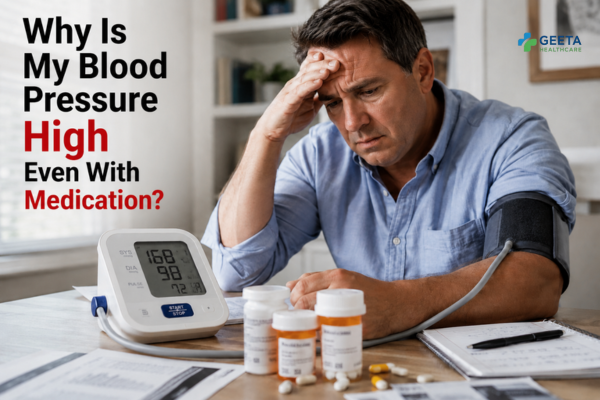
High blood pressure (hypertension) is a common condition that can sometimes remain high even while taking medication. This doesn’t always mean the treatment isn’t working, as factors like lifestyle habits, missed doses, stress, or underlying health conditions can affect blood pressure control. Identifying the cause is key to managing it effectively.
What Is High Blood Pressure?
Blood pressure measures how hard your blood pushes against your artery walls each time your heart beats. A reading below 120/80 mmHg is generally considered normal. However, persistently high blood pressure can increase the risk of heart disease, stroke, and kidney damage. Regular check-ups at a reputable healthcare hospital in Gurgaon can help monitor and manage your condition effectively.
Why Does Blood Pressure Stay High Even With Medication?
Sometimes, blood pressure just refuses to drop, even with medication. That can happen for a handful of reasons:
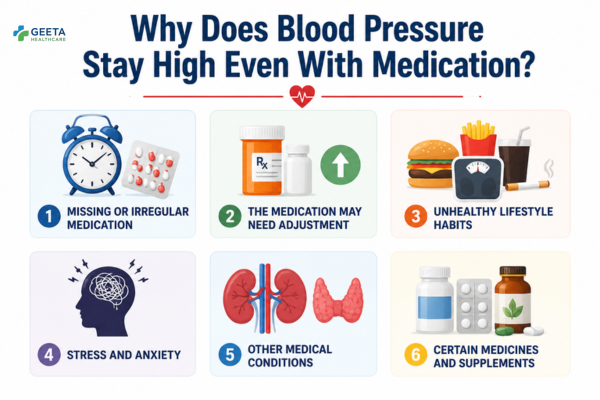
1. Missing or Irregular Medication
If you forget doses, take your meds at different times daily, or stop without checking with your doctor, your blood pressure can become tough to manage.
2. The Medication May Need Adjustment
Everyone’s body reacts differently. Sometimes the dose or drug you’re on just isn’t enough. Your doctor might need to change your prescription or add another one to get results.
3. Unhealthy Lifestyle Habits
Medicine can only do so much if daily habits keep your blood pressure up. Some usual culprits:
- Eating salty food
- Carrying extra weight
- Not moving enough
- Smoking
- Drinking too much alcohol
- Not sleeping well
Healthy lifestyle changes combined with proper medical treatment can significantly improve blood pressure control and lower the risk of complications.
4. Stress and Anxiety
Constant stress can bump up your blood pressure and might also push you toward bad habits like eating junk food or picking up cigarettes. Finding ways to relax, exercise, or just take a breather sometimes can help your treatment work better.
5. Other Medical Conditions
Certain health conditions can make hypertension harder to manage, including:
- Kidney disease
- Diabetes
- Thyroid disorders
- Sleep apnea
- Hormonal disorders
Treating these underlying conditions is often necessary to achieve better blood pressure control.
6. Certain Medicines and Supplements
Some over-the-counter drugs and supplements can make blood pressure control harder. These include painkillers like NSAIDs, decongestants, steroids, and even some herbal remedies. Always tell your doctor about anything you take, just to be safe.
How Might One Reduce Their Blood Pressure Levels?
Should your blood pressure stay high even with meds, do not cease taking them without talking to your physician. Rather, concentrate upon these beneficial routines:
- Take your medication exactly as prescribed.
- Reduce salt and processed foods in your diet.
- Eat more fruits, vegetables, whole grains, and lean proteins.
- Exercise for at least 30 minutes on most days.
- Maintain a healthy weight.
- Quit smoking and limit alcohol.
- Monitor your blood pressure regularly at home.
- Keep regular follow-up appointments with your healthcare provider.
When Should You See a Doctor?
You should consult your doctor if:
- Have consistently high blood pressure despite taking medication.
- Notice frequent high readings at home.
- Experience medication side effects.
- Develop symptoms like severe headache, chest pain, blurred vision, dizziness, or shortness of breath.
If you’re experiencing uncontrolled blood pressure, consult an experienced general physician specialist in Bhondsi, Gurugram for a thorough evaluation and personalized treatment plan.
Conclusion
Persistently high blood pressure even when taking drugs happens more frequently than individuals think. Usually, reasons include irregular drug intake, living choices, hidden sicknesses, or needing another therapy strategy. Good things exist since problems can usually be handled via proper doctor advice and sound everyday routines. Never halt or alter your medicine independently. Routine checks, steady life patterns, and quick visits to physicians serve as top methods to manage blood pressure levels well and lower chances of major illness dangers.