


Introduction
Dengue fever ranks among the most common viral infections carried by mosquitoes, especially during and right after the monsoon season. It spreads through bites from an infected Aedes mosquito and can affect anyone, regardless of age. Many cases are mild, sure, but dengue can turn serious if not caught and treated early. Recognizing those early symptoms can really help you get the medical attention you need on time, reducing the chances of severe complications
What Is Dengue Fever?
Dengue fever is a viral infection spread through the bite of an infected Aedes aegypti mosquito. Symptoms usually appear 4 to 10 days after the bite and can range from mild to severe. Early diagnosis and treatment at a trusted Healthcare hospital in Gurgaon, along with proper hydration and rest, can help most people recover successfully.
Early Symptoms of Dengue You Should Never Ignore
Dengue symptoms often hit suddenly, resembling a flu in the early stages. However, some warning signs demand immediate medical attention.
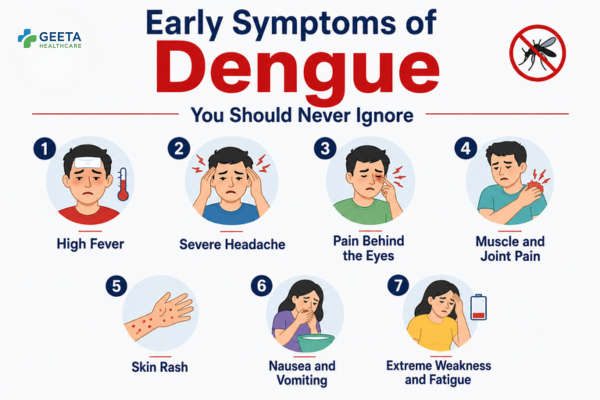
1. High Fever
A sudden high fever often hitting 104°F (40°C) is commonly the first sign of dengue. This fever can stick around for 2 to 7 days and usually comes with chills.
2. Severe Headache
A lot of people deal with intense headaches, particularly around the forehead area. The pain tends to be persistent, and standard painkillers might not really help.
3. Pain Behind the Eyes
Pain behind the eyes is a classic symptom of dengue. It can become more pronounced when moving your eyes and can feel pretty uncomfortable.
4. Muscle and Joint Pain
Dengue is often called “breakbone fever” for a reason, it can cause severe pain in muscles, joints, and bones. Even basic movements might feel painful, so proper medical treatment is recommended.
5. Skin Rash
A red or pink rash could appear a few days after the fever kicks in. This rash might show up on the face, arms, chest, or legs and could be itchy for some.
6. Nausea and Vomiting
Nausea, a loss of appetite, and repeated vomiting are common and can lead to dehydration if not taken care of properly.
7. Extreme Weakness and Fatigue
Feeling unusually tired, weak, or exhausted is pretty common during a dengue infection. This fatigue might linger even after the fever has faded.
Warning Signs of Severe Dengue
In certain cases, dengue can become life-threatening. You should seek medical help right away if you notice any of these symptoms:
- Severe abdominal pain
- Persistent vomiting
- Bleeding from gums or nose
- Blood in vomit or stool
- Difficulty breathing
- Cold or clammy skin
- Extreme weakness or restlessness
- Reduced urine output
- Confusion or drowsiness
These warning signs often appear when the fever starts to drop, tricking many people into thinking they’re on the mend while, in reality, their condition might be worsening.
When Should You Visit a Doctor?
You should see a doctor right away if:
- You’ve got a high fever that sticks around for more than two days.
- You’re feeling a severe headache and body aches.
- You notice a skin rash appearing with the fever.
- You notice any bleeding or severe abdominal pain.
- You have difficulty drinking fluids due to continuous vomiting.
Catching things early with blood tests and regular check-ups can help stop serious issues.If symptoms persist or worsen, consult a trusted general physician specialist in Bhondsi, Gurugram for timely diagnosis and appropriate treatment
Act Quickly If You Notice These Signs
- Contact your doctor immediately if symptoms worsen.
- Drink plenty of fluids to prevent dehydration.
- Get adequate rest and avoid strenuous activities.
- Follow your doctor’s advice and take only prescribed medicines.
- Seek emergency medical care if you experience severe abdominal pain, persistent vomiting, bleeding, difficulty breathing, or extreme weakness.
What Should You Avoid?
- Avoid dehydration.
- Avoid strenuous physical activities.
- Do not take ibuprofen or aspirin without medical advice.
- Avoid oily, spicy, and processed foods.
- Do not ignore warning signs such as bleeding, severe abdominal pain, or persistent vomiting.
Conclusion
Dengue can be a serious illness, but spotting those early symptoms can really change the game for recovery. A sudden high fever, severe headache, body pain, nausea, and skin rash shouldn’t be brushed aside, especially during dengue season. If you or someone close to you shows these signs, get medical advice fast. Early diagnosis, staying hydrated, and proper treatment are key to preventing complications and ensuring a safe recovery.