

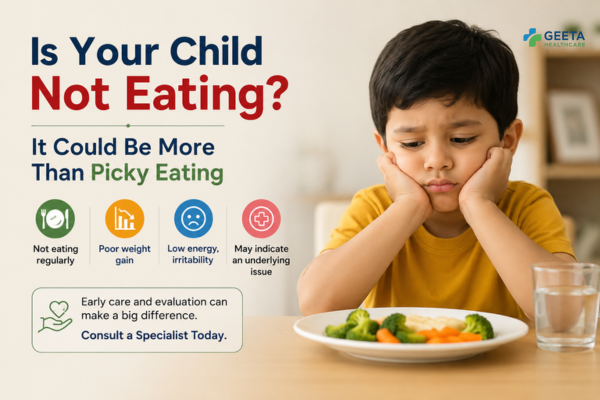
He’s a picky eater is something many parents say when their child refuses meals. If your child consistently eats very little it should not be ignored. Poor eating habits can be a sign of nutritional deficiencies, digestive issues, infections or other health concerns that may affect your child’s growth and development.
The longer this issue goes unnoticed the the risk to your child’s energy levels, immunity, learning ability and overall well-being. Understanding the causes can help parents take action and protect their child’s health.
Why Is My Child Not Eating?
There are several reasons why a child may lose interest in food. Some causes are temporary while others may require an evaluation.
1. Growth and Appetite Changes
Children’s appetites naturally change as they grow. If a prolonged decrease in appetite is accompanied by poor weight gain or slow growth it should not be overlooked. Your child’s appetite and growth are closely linked.
2. Illness or Infection
Minor infections can reduce appetite and disrupt your child’s eating habits. If your child frequently falls ill or struggles to regain their appetite after recovery, proper medical treatment and a timely medical assessment may be necessary.
3. Teething Problems
Teething can temporarily affect eating patterns in infants and toddlers. However persistent feeding difficulties should be evaluated to rule out causes. Teething is an issue that can impact eating.
4. Excessive Snacking
Frequent snacks, sugary drinks and excessive milk intake can suppress hunger. Prevent children from consuming balanced meals. Snacking habits can affect your child’s appetite.
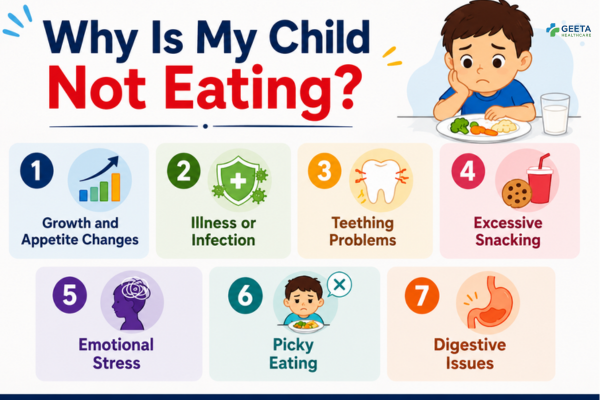
5. Emotional Stress
Children can experience stress and anxiety like adults. Changes at home school-related pressures or emotional challenges can affect appetite and eating behavior. Stress can impact your child’s eating habits.
6. Picky Eating
Although selective eating is extreme food refusal or a highly restricted diet can lead to nutritional deficiencies that may impact healthy growth. Picky eating can be a concern.
7. Digestive Issues
Constipation, acid reflux, food intolerances and gastrointestinal infections can make eating uncomfortable. Discourage children from consuming adequate meals. Digestive issues can affect eating.
Warning Signs Parents Should Never Ignore
A child who occasionally skips a meal is usually not a cause for concern. However medical attention should be sought if your child experiences:
- weight loss
- Poor weight gain or slow growth
- Persistent refusal to eat
- Frequent vomiting
- Difficulty swallowing
- constipation or diarrhea
- Low energy levels and fatigue
- Repeated illnesses
- Signs of vitamin or nutrient deficiencies
Ignoring these symptoms may allow an underlying condition to worsen over time. Your child’s health is important.
When Should You See a Pediatrician?
You should consult a pediatrician if:
- Your child’s poor appetite continues for several weeks
- There is noticeable weight loss or poor growth
- Your child shows constant fatigue or low energy
- Digestive problems like constipation, diarrhea, or stomach pain are present
- Your child frequently falls ill or has weak immunity
Don’t Wait Until It Affects Your Child’s Growth
Your child’s eating habits today can have an impact on their health tomorrow. What seems like picky eating may sometimes be a sign of an underlying issue that requires timely attention.
Early evaluation can help identify the cause, prevent complications and ensure your child receives the nutrition needed for growth and development. If you are concerned about your child’s appetite, seeking pediatric care now can provide answers, reassurance and the right treatment before the problem becomes more serious.
At Geeta Healthcare our pediatric specialists in Gurgaon are committed to helping children achieve health through comprehensive assessment, expert guidance and personalized care. Schedule a consultation today. Take a proactive step toward your child’s healthy future.